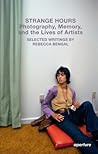
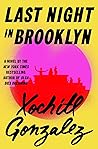
December 28, 2012

We might as well appreciate Dickey while we have the chance.


Reasons to Love New York 2012
No.8: Because the best story in baseball is somehow a Met.
by Will Leitch

"We might as well appreciate Dickey while we have the chance. Nothing this great can stay in Flushing for long."

I wasn't crazy about this Reasons to Love New York edition, to be honest. There were a few fine pieces but nothing spectacular. Blogging this though because I'm a Mets fan, an R.A. Dickey fan, and a Will Leitch fan. Unfortunately, R.A. Dickey was traded to the Toronto Blue Jays the week this issue came out. So sad! A great person and player for the Mets so, of course, we had to lose him.

December 24, 2012

The one essential quality is curiosity.


I finally finished The Gay Talese Reader! Long overdue. Of the four stories I had left to read, I wasn't crazy about "Ali in Havana," but loved "The Brave Tailors of Maida," featuring an anecdote about Gay Talese's father as an 8-year-old apprentice for a tailor in Calabria, Italy.

Excerpts from the remaining two stories below.

Origins of a Nonfiction Writer

"I learned to listen with patience and care, and never to interrupt even when people were having great difficulty in explaining themselves, for during such halting and imprecise moments (as the listening skills of my patient mother taught me) people often are very revealing--what they hesitate to talk about can tell much about them. Their pauses, their evasions, their sudden shifts in subject matter are likely indicators of what embarrasses them, or irritates them, or what they regard as too private or imprudent to be disclosed to another person at that particular time." (p. 228)

"Although I continued to forgo asking young women to dances, I sometimes did go alone in my new role as a social columnist. For individuals who were as shy and curious as myself, journalism was an ideal preoccupation, a vehicle that transcended the limitations of reticence. It also provided excuses for inquiring into other people's lives, asking them leading questions, and expecting reasonable answers; and it could as well be diverted into serving any number of hidden personal agendas." (p. 240)

When I Was 25

"It was during my obituary-writing period that I also began to concentrate on writing for the Times Sunday Magazine, for I was in the "doghouse" with the daily edition. After my cat story I did about thirty more Times magaziners in the months that followed. I wrote about silent-screen actresses in an age of sound, about old men who rang the bells during boxing matches at Madison Square Garden, about the river captains of the Staten Island ferries, about the window designers of Fifth Avenue boutiques and the sculptures of the plastic but nonetheless alluringly realistic female mannequins ... Advice to young writers? The one essential quality is curiosity, in my opinion, and the energy to get out and learn about the world and about people who lead unique lives, who dwell in obscure places."

November 24, 2012

His pride of authorship is such that he can barely wait for that person to drop dead.

Mr. Bad News by Gay Talese

In my first news reporting class, one of our first assignments was to write an obituary for someone who was still living. It's a bit of a morbid task--to write about the living as though they were already dead--but I actually had a lot of fun writing mine; I chose Annie Leibovitz. Gay Talese's Mr. Bad News is about the New York Times' legendary obituary writer, Alden Whitman.

"Joan was fascinated by Whitman, especially by his marvelous, magpie mind cluttered with all sorts of useless information: He could recite the list of popes backward and forward; knew the names of every king's mistress and his date of reign; knew that the Treaty of Westphalia was signed in 1648, that Niagara Falls is 167 feet high, that snakes do not blink; that cats attach themselves to places, not people, and dogs to people, not places; he was a regular subscriber to the New Statesman, Le Nouvel Observateur, to nearly every journal in the Out-of-Town Newsstand in Times Square, he read two books a day, he had seen Bogart in Casablanca three-dozen times. Joan knew she had to see him again, even though she was sixteen years his junior and a minister's daughter, and he was an atheist. They were married on November 13, 1960." (p. 174)

"The obituaries that leave Whitman untroubled are those that he is able to complete before the individual dies, such as the rather controversial one he did on Albert Schweitzer, which both paid tribute to "Le Grand Docteur" for his humanitarianism yet damned him for his lofty paternalism; and the one on Winston Churchill, a 20,000-word piece in which Whitman and several other Times men were involved and which was finished almost two weeks before Sir Winston's death. Whitman's obituaries on Father Divine, Le Corbusier, and T.S. Eliot were produced under deadline pressure but caused him no panic because he was quite familiar with the work and lives of all three, particularly Eliot, who had been the poet-in-residence at Harvard during Whitman's student days there. His obituary on Eliot began: "This is the way the world ends / This is the way the world ends / This is the way the world ends / Not with a bang but a whimper," and it went on to describe Eliot as a most unlikely poetic figure, lacking "flamboyance or oddity in dress or manner, and there was nothing romantic about him. He carried no auras, cast no arresting eye and wore his heart, as nearly as could be observed, in its proper anatomical place." (p. 176-7)

"This is part of an occupational astigmatism that afflicts many obituary writers. After they have written or read an advance obituary about someone, they come to think of that person as being dead in advance ... Furthermore, he admits that, after having written a fine advance obituary, his pride of authorship is such that he can barely wait for that person to drop dead so that he may see his masterpiece in print. While this revelation may mark him as something less than romantic, it must be said in his defense that he thinks no differently than most obituary writers; they are, even by City Room standards, rather special." (p. 177-8)

"Occasionally all reporters must do their share of the smaller obituaries, which are bad enough, but the long ones are hard work; they must be accurate and interesting, they must be infallible in their analysis, and will be later judged, as will the Times, by historians. And yet for the writer there is no glory, no byline, it being a policy of the newspaper to eliminate bylines from such stories, but Whitman does not care. Anonymity superbly suits him. He prefers being everyman, anyman, nobody--Times Employee No. 97353, Library Card No. 663 7662, the possessor of a Sam Goody Courtesy Card, the borrower of his mother-in-law's 1963 Buick Compact on sunny weekends, an eminently unquotable man, a onetime manager for the Roger Ludlowe High School football, baseball, and basketball teams who is now keeping toll for the Times. All day long while his colleagues are running this way and that, pursuing the here and now, Whitman sits quietly at his desk near the back, sipping his tea, dwelling in his strange little world of the half-living, the half-dead in this enormous place called the City Room." 

Alden Whitman died on Sept. 4, 1990. His Times obituary is rather dull in my opinion.

September 22, 2012

"I love all of you!"

Photos by Stacy LaBarge. Caption from Esquire magazine: Top left: Ruins of the Fastrip in the immediate aftermath. The people in the middle are waiting for others to emerge out of the cooler, which was smashed almost to the ground. To the far right, Corey, in white, is helping Isaac, who lost a flip-flip, steer clear of wreckage. Top right: A man walking on East Twentieth Street toward downtown. All life looked destroyed for miles. Bottom: The group reunited five weeks after the tornado on the spot at East Twentieth Street and Duquense where the Fastrip and cooler once stood. The lot has been cleared and a new Fastrip has been built on the existing foundation and footprint. 

"Heavenly Father!" "I love you all!" "I love everyone!" "Jesus! Jesus! Jesus! Jesus! Jesus! Jesus! Jesus! Jesus! Jesus! Jesus! Jesus! Jesus! Jesus! Jesus! Jesus!" "I love all of you!" by Luke Dittrich
Esquire, October 2011

So, I'm still doing that thing where I'm catching up on all of the magazines I haven't read in the past year or so. I picked this issue up and as I started reading, I realized I read most of the stories before (i.e. Chris Jones' profile on Justin Timberlake was pretty excellent), and I couldn't remember why I saved it until I got to Luke Dittrich's story about 24 survivors of the tornado that tore through the town of Joplin, Mo. in May 2011.

I always meant to read it, and more so after Dittrich won the National Magazine Award for it in the feature writing category earlier this year.

I can't say enough about Luke Dittrich ... I am in just complete awe of his work. This is a sentiment shared by many in the industry so I am hardly unique in saying this, but still, I must say it.

Any time I doubt I want to do this or need to remember why, I just need to read and remember his work—his meticulous, careful, careful reporting, the phrasing of his words, the storytelling, his ability to grab the reader until the story's done.

Must read.

Update 11/24/12

About a week after I wrote this blog post, Luke Dittrich e-mailed to tell me he loved & appreciated what I wrote. I freaked out. I remember I was having a crappy day, and I received it at the end before I left for work and it just made everything better, instantly. I'm not sure how he found my post (I think my tagging his name had to do with it?) but him e-mailing me to tell him I made his day was definitely the coolest thing to happen that week!

July 31, 2012

But when Morgan Freeman says it, the words somehow minister.

by Jim Herrington
Really loved the lede to this Morgan Freeman profile.

This Earth That Holds Me Fast Will Find Me Breath by Tom Chiarella
Esquire, July 2012

"We halved the property on a footpath hypotenuse apparent only to him, gazed at his pond and his band of horses from the white, white rails of the fence line, visited his parents' grave site, peered at the house they once lived in, surveyed the trees he'd planted to soak up the drainage, walked the berm he created from earth he himself moved, regarded his ever-growing inventory of farm equipment (he with some consternation), then ambled back through the uncharged cool of his house out to his patio to settle side by side in lounge chairs on nylon cushions air-dried in the noon heat of a spring day in Mississippi. It was there that Morgan Freeman said, "Well, everyone lives somewhere." Not a particularly meaningful line, not by itself. Everyone lives somewhere. If you repeat it out loud—you, that is, just say it right here and now before you read forward—it will sound glib. Everyone lives somewhere. Displaced from this venue, the spread of Morgan Freeman's bucolic estate outside the tiny hamlet of Charleston, Mississippi, the vast tumble of his house with its seven gabled roofs, the words will likely sound arrogant, fatalistic, callow. But when Morgan Freeman says it, the words somehow minister. In his voice, in the familiar tone of a thousand voice-overs, it becomes a kind of punctuation. Everyone lives somewhere. Not to say that he meant for it to be anything very deep. He's not that manipulative. He was just saying. So, Morgan Freeman, uttering an unrehearsed breath line of regret and realization. You can hear him. This happenstance Zen, a plaintive caesura. He can't help it if everything he says sounds like a pregnant pause waiting to happen. He's saying only what's on his mind—that he's never really left, that he can't do as much as he used to, that it's comforting to have a home that lasts. He just doesn't want to utter these fat little muffins of truth. Morgan Freeman is far too grumpy for truisms. And that's probably why I can't hear the next thing he says at all; he must be explaining himself when his voice drops out. He never really stops talking, but sometimes his voice just vanishes."

March 25, 2012

"The Chinese attitude was more straightforward. Money equals power, that's it."

Liu breaks for lunch in Flushing (by Pari Dukovic) via NY Mag
Unlucky 800 by Mark Jacobson
New York Magazine

I remember when John Liu was elected to the NYC council! Well, I remember when he came to my elementary school in 2001 and spoke to an assembly of sixth graders about god knows what and someone (the principal? Or assistant principal?) presented him with a T-shirt. He had a successful career and eventually became NYC comptroller, which he still is today. But recent allegations challenging his use of campaign money have thrown him into the spotlight—two people from his campaign were arrested—and threatened his career and prospects of becoming NYC's mayor in 2013. Jacobson explores how Liu's Asian background and family have shaped Liu, his career, and the communities he represents.  Also, in turn, how those communities view him. Jacobson presented some interesting observations and conclusions.

"That was John Liu's story back in January, when there was every reason to hope that he was telling the truth, or close enough to it. This was because John Liu's story is that same old New York story we never tire of hearing about ourselves, preferably with swelling Aaron Copland music and the Statue of Liberty in the background. Liu's family were "pioneers," part of the initial wave of Taiwanese to come to Queens following the 1965 Immigration and Nationality Act, which swept away the last vestiges of the neo-genocidal Chinese exclusion acts that once effectively prohibited Chinese women from entering the country. The Lius settled in Flushing, in part, because Manhattan's Chinatown was viewed as a packed tenement pile, devoid of grasslands and terrorized by youth gangs. Chinatown was also controlled politically and economically by a Cantonese-speaking Old Guard with strong ties to Chiang Kai-shek's mostly despised Kuomintang. In comparison, Flushing, which had maybe a couple of chop-suey restaurants, was wide open, a veritable golden mountain of opportunity, and low rents, with access to the 7 train. With people like me moving out, there was plenty of room to build another, better life."

"Nowadays, no serious pol can afford not to show his face on Chinese New Year's."

"People say that if you want to figure out who John Liu really is, you have to go back to the day his father Americanized the family's first names. "Dad was a Kennedy fan. So when we came here, he changed his name to Joseph. He had three boys, so I became John and my two brothers Robert and Edward," Liu said, adding that when his own son was born, he was named Joey, which "broke the tradition."
"The Taiwanese tradition?" I inquired dimly.
"No," Liu replied. "The Kennedy tradition ... you're supposed to name the first boy after the father, which would have made Joey named John Jr., but we decided not to follow that and name him after my dad.""

"Nonetheless, this was how a number of people, Asian and otherwise, felt about Liu's current predicament: It was a cultural thing. Much of this has to do with money, or at least the perception of the Chinese attitude toward money. In the late nineties, after my father died, my mother decided to sell our Flushing house. My parents had purchased the place for $12,000 with the help of a G.I. loan in the early fifties. But this was a whole new world, the real-estate lady told my mother. The place was worth at least $300,000, maybe more if the buyer turned out to be a stooped-over Chinese guy who got out of his dented Toyota holding a suitcase stuffed with cash.
"Sounds typical," said Jeff Yang, who writes the "Tao Jones" column for The Wall Street Journal and once edited a book called Secret Identities: The Asian-American Superhero Anthology. "In the West, we tend to think about money in the abstract—what does my money and what I do with it say about me? The Chinese attitude was more straightfoward. Money equals power, that's it," Yang said. For the immigrant, cash mattered because "they can't speak the language, they can't vote. Yet they need some control, some power over their surroundings. That power is cash, and the transfer of it is simple, direct. If a John Liu comes along, he's the comptroller, a successful and powerful man with an even better future. So people want to connect with him in the best way they can. They want to give him their money. It doesn't matter how rich they are, if they're broke, or what some convoluted law they never heard of says: It is an honor to give money to John Liu."

There's more but the article is worth reading for it. Lastly—because I think it's become evident I'm a sucker for great endings—I loved the end. Jacobson is with Liu at the Chinese New Year's parade this year when he noticed him talking to the "Money God" (sort of Chinese equivalent of Santa Claus; the figure hands out red envelopes with money and candy inside to children). When Jacobson later asked the man what he said to John Liu, the reply, from one money figure to the other, was: "I told him good luck, because he is going to need it."

March 18, 2012

It was an electric summer, with the nymphets batting around like moths against the screen.

Looking for Hemingway by Gay Talese

Really loved this one. For some reason I didn't expect to, or didn't expect anything but Talese painted such an interesting, magical portrait of what the early years of tbe Paris Review was like for the men (and few women) who were involved. It was such a wonderful read and the way James Baldwin brought it all back to reality in the end perfected it.

"He became a chess hustler in cafes, earning several hundred francs a night. It was in the cafes that he met Peter Matthiessen, and they both talked of starting a little magazine that would be the Paris Review. Before coming to Paris, Humes had never worked on a magazine, but had grown fond of a little magazine called Zero, edited by a small Greek named Themistocles Hoetes, whom everybody called "Them." Impressed by what Them had done with Zero, Humes purchased for $600 a magazine called the Paris News Post, which John Ciardi later called the "best fourth-rate imitation of the New Yorker I have ever seen," and to which Matthiessen felt condescendingly superior, and so Humes sold it for $600 to a very nervous English girl, under whom it collapsed one issue later. Then Humes and Matthiessen and others began a long series of talks on what policy, if any, they would follow should the Paris Review ever get beyond the talking and drinking stages.
When the magazine was finally organized, and when George Plimpton was selected as its editor instead of Humes, Humes was disappointed. He refused to leave the cafes to sell advertising or negotiate with French printers. And in the summer of 1952 he did not hesitate to leave Paris with William Styron, accepting an invitation from a French actress, Mme. Nenot, to go down to Cap Myrt, near Saint-Tropez, and visit her fifty-room villa that had been designed by her father, a leading architect. The villa had been occupied by the Germans early in the war. And so when Styron and Humes arrived they found holes in its walls, through which they could look out to the sea, and the grass was so high and the trees so thick withg rapes that Humes's little Volkswagen became tangled in the grass. So they went on foot toward the villa, but suddenly stopped when they saw, rushing past them, a young, half-naked girl, very brown from the sun, wearing only handkerchiefs tied bikini-style, her mouth spilling with grapes. Screaming behind her was a lecherous-looking old French farmer whose grape arbor she obviously had raided.
"Styron!" Humes cried, gleefully, "we have arrived!"
"Yes," he said, "we are here!"
More nymphets came out of the trees in bikinis later, carrying grapes and also half cantaloupes the size of cartwheels, and they offered some to Styron and Humes. The next day they all went swimming and fishing, and, in the evening, they sat in the bombed-out villa, a breathtaking site of beauty and destruction, drinking wine with the young girls who seemed to belong only to the beach. It was an electric summer, with the nymphets batting around like moths against the screen. Styron remembers it as a scene out of Ovid, Humes as the high point of his career as an epicurean and scholar."

"But as much as anything else, the Paris Review survived because it had money. And its staff members had fun because they knew that should they ever land in jail, their friends or families would always bail them out. They would never have to share with James Baldwin the experience of spending eight days and nights in a dirty French cell on the erroneous charge of having stolen a bedsheet from a hotelkeeper, all of which led Baldwin to conclude that while the wretched round of hotel rooms, bad food, humiliating concierges, and unpaid bills may have been the "Great Adventure" for the Tall Young Men, it was not for him because, he said, "there was a real question in my mind as to which would end soonest, the Great Adventure or me.""

"A few blocks away, in a small, dark apartment, another exile, James Baldwin, said, "It didn't take long before I really was no longer a part of them. They were more interested in kicks and hashish cigarettes than I was. I had already done that in the Village when I was eighteen or seventeen. It was a little boring by then.
They also used to go to Montparnasse, where all the painters and writers went, and where I hardly went. And they used to go there and hang around at the cafes for hours and hours looking for Hemingway. They didn't seem to realize," he said, "that Hemingway was long gone."