July 31, 2012

But when Morgan Freeman says it, the words somehow minister.

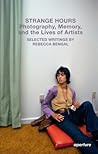
by Jim Herrington
Really loved the lede to this Morgan Freeman profile.

This Earth That Holds Me Fast Will Find Me Breath by Tom Chiarella
Esquire, July 2012

"We halved the property on a footpath hypotenuse apparent only to him, gazed at his pond and his band of horses from the white, white rails of the fence line, visited his parents' grave site, peered at the house they once lived in, surveyed the trees he'd planted to soak up the drainage, walked the berm he created from earth he himself moved, regarded his ever-growing inventory of farm equipment (he with some consternation), then ambled back through the uncharged cool of his house out to his patio to settle side by side in lounge chairs on nylon cushions air-dried in the noon heat of a spring day in Mississippi. It was there that Morgan Freeman said, "Well, everyone lives somewhere." Not a particularly meaningful line, not by itself. Everyone lives somewhere. If you repeat it out loud—you, that is, just say it right here and now before you read forward—it will sound glib. Everyone lives somewhere. Displaced from this venue, the spread of Morgan Freeman's bucolic estate outside the tiny hamlet of Charleston, Mississippi, the vast tumble of his house with its seven gabled roofs, the words will likely sound arrogant, fatalistic, callow. But when Morgan Freeman says it, the words somehow minister. In his voice, in the familiar tone of a thousand voice-overs, it becomes a kind of punctuation. Everyone lives somewhere. Not to say that he meant for it to be anything very deep. He's not that manipulative. He was just saying. So, Morgan Freeman, uttering an unrehearsed breath line of regret and realization. You can hear him. This happenstance Zen, a plaintive caesura. He can't help it if everything he says sounds like a pregnant pause waiting to happen. He's saying only what's on his mind—that he's never really left, that he can't do as much as he used to, that it's comforting to have a home that lasts. He just doesn't want to utter these fat little muffins of truth. Morgan Freeman is far too grumpy for truisms. And that's probably why I can't hear the next thing he says at all; he must be explaining himself when his voice drops out. He never really stops talking, but sometimes his voice just vanishes."

March 25, 2012

"The Chinese attitude was more straightforward. Money equals power, that's it."

Liu breaks for lunch in Flushing (by Pari Dukovic) via NY Mag
Unlucky 800 by Mark Jacobson
New York Magazine

I remember when John Liu was elected to the NYC council! Well, I remember when he came to my elementary school in 2001 and spoke to an assembly of sixth graders about god knows what and someone (the principal? Or assistant principal?) presented him with a T-shirt. He had a successful career and eventually became NYC comptroller, which he still is today. But recent allegations challenging his use of campaign money have thrown him into the spotlight—two people from his campaign were arrested—and threatened his career and prospects of becoming NYC's mayor in 2013. Jacobson explores how Liu's Asian background and family have shaped Liu, his career, and the communities he represents.  Also, in turn, how those communities view him. Jacobson presented some interesting observations and conclusions.

"That was John Liu's story back in January, when there was every reason to hope that he was telling the truth, or close enough to it. This was because John Liu's story is that same old New York story we never tire of hearing about ourselves, preferably with swelling Aaron Copland music and the Statue of Liberty in the background. Liu's family were "pioneers," part of the initial wave of Taiwanese to come to Queens following the 1965 Immigration and Nationality Act, which swept away the last vestiges of the neo-genocidal Chinese exclusion acts that once effectively prohibited Chinese women from entering the country. The Lius settled in Flushing, in part, because Manhattan's Chinatown was viewed as a packed tenement pile, devoid of grasslands and terrorized by youth gangs. Chinatown was also controlled politically and economically by a Cantonese-speaking Old Guard with strong ties to Chiang Kai-shek's mostly despised Kuomintang. In comparison, Flushing, which had maybe a couple of chop-suey restaurants, was wide open, a veritable golden mountain of opportunity, and low rents, with access to the 7 train. With people like me moving out, there was plenty of room to build another, better life."

"Nowadays, no serious pol can afford not to show his face on Chinese New Year's."

"People say that if you want to figure out who John Liu really is, you have to go back to the day his father Americanized the family's first names. "Dad was a Kennedy fan. So when we came here, he changed his name to Joseph. He had three boys, so I became John and my two brothers Robert and Edward," Liu said, adding that when his own son was born, he was named Joey, which "broke the tradition."
"The Taiwanese tradition?" I inquired dimly.
"No," Liu replied. "The Kennedy tradition ... you're supposed to name the first boy after the father, which would have made Joey named John Jr., but we decided not to follow that and name him after my dad.""

"Nonetheless, this was how a number of people, Asian and otherwise, felt about Liu's current predicament: It was a cultural thing. Much of this has to do with money, or at least the perception of the Chinese attitude toward money. In the late nineties, after my father died, my mother decided to sell our Flushing house. My parents had purchased the place for $12,000 with the help of a G.I. loan in the early fifties. But this was a whole new world, the real-estate lady told my mother. The place was worth at least $300,000, maybe more if the buyer turned out to be a stooped-over Chinese guy who got out of his dented Toyota holding a suitcase stuffed with cash.
"Sounds typical," said Jeff Yang, who writes the "Tao Jones" column for The Wall Street Journal and once edited a book called Secret Identities: The Asian-American Superhero Anthology. "In the West, we tend to think about money in the abstract—what does my money and what I do with it say about me? The Chinese attitude was more straightfoward. Money equals power, that's it," Yang said. For the immigrant, cash mattered because "they can't speak the language, they can't vote. Yet they need some control, some power over their surroundings. That power is cash, and the transfer of it is simple, direct. If a John Liu comes along, he's the comptroller, a successful and powerful man with an even better future. So people want to connect with him in the best way they can. They want to give him their money. It doesn't matter how rich they are, if they're broke, or what some convoluted law they never heard of says: It is an honor to give money to John Liu."

There's more but the article is worth reading for it. Lastly—because I think it's become evident I'm a sucker for great endings—I loved the end. Jacobson is with Liu at the Chinese New Year's parade this year when he noticed him talking to the "Money God" (sort of Chinese equivalent of Santa Claus; the figure hands out red envelopes with money and candy inside to children). When Jacobson later asked the man what he said to John Liu, the reply, from one money figure to the other, was: "I told him good luck, because he is going to need it."

March 18, 2012

It was an electric summer, with the nymphets batting around like moths against the screen.

Looking for Hemingway by Gay Talese

Really loved this one. For some reason I didn't expect to, or didn't expect anything but Talese painted such an interesting, magical portrait of what the early years of tbe Paris Review was like for the men (and few women) who were involved. It was such a wonderful read and the way James Baldwin brought it all back to reality in the end perfected it.

"He became a chess hustler in cafes, earning several hundred francs a night. It was in the cafes that he met Peter Matthiessen, and they both talked of starting a little magazine that would be the Paris Review. Before coming to Paris, Humes had never worked on a magazine, but had grown fond of a little magazine called Zero, edited by a small Greek named Themistocles Hoetes, whom everybody called "Them." Impressed by what Them had done with Zero, Humes purchased for $600 a magazine called the Paris News Post, which John Ciardi later called the "best fourth-rate imitation of the New Yorker I have ever seen," and to which Matthiessen felt condescendingly superior, and so Humes sold it for $600 to a very nervous English girl, under whom it collapsed one issue later. Then Humes and Matthiessen and others began a long series of talks on what policy, if any, they would follow should the Paris Review ever get beyond the talking and drinking stages.
When the magazine was finally organized, and when George Plimpton was selected as its editor instead of Humes, Humes was disappointed. He refused to leave the cafes to sell advertising or negotiate with French printers. And in the summer of 1952 he did not hesitate to leave Paris with William Styron, accepting an invitation from a French actress, Mme. Nenot, to go down to Cap Myrt, near Saint-Tropez, and visit her fifty-room villa that had been designed by her father, a leading architect. The villa had been occupied by the Germans early in the war. And so when Styron and Humes arrived they found holes in its walls, through which they could look out to the sea, and the grass was so high and the trees so thick withg rapes that Humes's little Volkswagen became tangled in the grass. So they went on foot toward the villa, but suddenly stopped when they saw, rushing past them, a young, half-naked girl, very brown from the sun, wearing only handkerchiefs tied bikini-style, her mouth spilling with grapes. Screaming behind her was a lecherous-looking old French farmer whose grape arbor she obviously had raided.
"Styron!" Humes cried, gleefully, "we have arrived!"
"Yes," he said, "we are here!"
More nymphets came out of the trees in bikinis later, carrying grapes and also half cantaloupes the size of cartwheels, and they offered some to Styron and Humes. The next day they all went swimming and fishing, and, in the evening, they sat in the bombed-out villa, a breathtaking site of beauty and destruction, drinking wine with the young girls who seemed to belong only to the beach. It was an electric summer, with the nymphets batting around like moths against the screen. Styron remembers it as a scene out of Ovid, Humes as the high point of his career as an epicurean and scholar."

"But as much as anything else, the Paris Review survived because it had money. And its staff members had fun because they knew that should they ever land in jail, their friends or families would always bail them out. They would never have to share with James Baldwin the experience of spending eight days and nights in a dirty French cell on the erroneous charge of having stolen a bedsheet from a hotelkeeper, all of which led Baldwin to conclude that while the wretched round of hotel rooms, bad food, humiliating concierges, and unpaid bills may have been the "Great Adventure" for the Tall Young Men, it was not for him because, he said, "there was a real question in my mind as to which would end soonest, the Great Adventure or me.""

"A few blocks away, in a small, dark apartment, another exile, James Baldwin, said, "It didn't take long before I really was no longer a part of them. They were more interested in kicks and hashish cigarettes than I was. I had already done that in the Village when I was eighteen or seventeen. It was a little boring by then.
They also used to go to Montparnasse, where all the painters and writers went, and where I hardly went. And they used to go there and hang around at the cafes for hours and hours looking for Hemingway. They didn't seem to realize," he said, "that Hemingway was long gone."

February 26, 2012

She could only see the back of its great, beautiful head, still lifted high.

Esquire caption: Not the actual animals but the number and types killed that night, from top, left to right: two gray wolves, two grizzly bears, two macaque monkeys (one eaten, one presumed so), eighteen tigers, eight lionesses, six black bears, nine male lions, and three mountain lions. All were buried in a mass grave on Thompson's farm.

Animals by Chris Jones
Esquire, March 2012

This story made me sad, excited, scared. It was wonderful. It started off a little slow (necessary though to introduce everything), but once Chris Jones got to the meat, the action, I couldn't put the story down. I hadn't heard of this when it happened (though I feel like I should have...), but Jones indicates that there was a lot of misunderstanding about what happened that night, so he got to the bottom of it. The massacre was a necessary choice the police had to make given the circumstances. And like Todd Kanavel, one of the detectives, told Jones, "I think people were thinking we were hooping and hollering, like a bunch of rednecks. This was a police operation." 

There was range of emotion. One officer felt tormented by having to kill the beautiful animals. Excitement. There's confusion and awe regarding Thompson's suicide. Man, the part with the white tigerit just killed me. In the end he was torn to pieces by one of his animals. Just wow. Also, Chris Jones is just a really great fucking writer. GQ's Chris Heath covered the same story in its March 2012 issue, so there was talk about that. I've only read the first graf, just now. They both started with the same scene: the horses. I imagine I'll read the rest later but for now I'll say: no competition. 

Esquire also released the first ever magazine article trailer to hype the story.

This part. Wow.
"They got out of the cruiser, and they both saw Terry Thompson, down a short enbankment, bloody and lying flat on his back. There was a pistol on the grass; Blake didn't see the blue bolt cutters that were lying about ten feet away. A tigera white tiger, a genetic mutant was gnawing at Thompson's head. Most of the top of his head was missing; other parts of him had also been eaten. Now the white tiger dragged Thompson around, puncturing his throat with his teeth. There was a lot of blood. Behind his body, a small trash fire smoldered. Smoke rose into the darkening sky. "I'll always wonder what he didn't want us to find," Blake says. The tiger continued to feed."

This was kind of funny. Jones introduced this part after some of the intensity had subsided and I just thought it was so ridiculous that a group of people drove up to the farm that night after hearing what happened and tried to steal one of the dead lions. Also, kind of shows the extent of Jones reporting. When the police (I assume) told him someone had done this, he went and found them.
"The five friends, who were later charged with misdemeanor theft, were told to return their stolen lion to the farm. A deputy followed them in his cruiser, and he radioed Lawhorne and Swope, asking them to meet him at the bottom of the driveway. They lashed ropes around the lion and dragged it out of the Jeep, leaving a bloodstain in the back. After, Lawhorne and Swope talked about what would have happened had the lion theft gone uninterrupted: Most important, there would have been a lion missing from the count. For weeks or months or even years after, there would have been calls about the phantom lion of Zanesville, a knife-toothed ghost that would appear in nighttime imaginations until it finally became legend, when all the while it was just a skin spread out on the floor of a house in Cambridge, warming the feet of five friends playing cards."

"Depending on your proximity to Zanesville, Ohio, and your feelings about the relative value of animal life, what happened at the farm was either one of the worst mass shootings in American history or a miracle. Other than Terry Thompson, no humans had suffered an injury outside of hearing loss. More than forty animals had been shot. One, a monkey, had been torn apart by the big cats, its shredded body sprawled out by the house. Six animals had survived, because Thompson had left them locked away in their pens in the house, for reasons known only to him: the three leopards, the small bear, and the two screaming monkeys."

"Wolfe got her tranquilizer gun, a black, bolt-action rifle with a scope. She also had a plastic case, like a tackle box, filled with darts of varying size. Tranquilizing animals is a tricky business. Animals fight artificial sleep, especially panicked ones. Their systems might resist the tranquilizer for ten or fifteen minutes, maybe more. Different animals also require different drugs and different amounts of them, depending on the species, how much they weigh, and whether they've eaten recently. Too much tranquilizer and the animal might die; not enough and the animal will only be enraged by it. Trajectory physics also complicate matters. Darts don't behave like bullets. They are not nearly as consistent in their flight, and it doesn't take much to knock them off their intended course. They need to find muscle."

The death of the last animal. Can't lie, this part made me tear.
"Wolfe shook her head and told the men to wait. After a full ten minutes had passed, she crept back into the woods. And there was the tiger in front of herstill alive and still awake. Its breathing was labored, but its head was raised. Wolfe watched the tiger for a moment. She stood in the rain and watched, the only time in her life she had ever been so close to a living tiger without seeing it through the bars of a cage. The tiger's head was turned away from her. She never did see its eyes. She could see only the back of its great, beautiful head, still lifted high, while its body settled deep into the soft ground, sinking deeper with each breath. Wolfe stepped back, and the men took her place. Lawhorne raised his M4 to his shoulder, and he pulled the trigger, and the last Zanesville tiger finally fell, the sound of the bullets echoing between the trees."

February 25, 2012

The easiest way to get rid of a Minus is to change it into a Plus.


The Tao of Pooh by Benjamin Hoff

Life has been messy lately. Have been disappointed, displeased, dissatisfied, dis, dis, dis, with several parts of my life. Crummy feelings. So, a couple of friends suggested I read Tao of Pooh for some happy thinking.

Not saying it was amazing, but it was sweet. Made me smile every now and then. Slightly cliche but still, some words to remember.

"Once you face and understand your limitations, you can work with them, instead of having them against you and get in your way, which is what they do when you ignore them, whether you realize it or not.  And then you will find that, in many cases, your limitations can be your strengths." (p. 48)

"Sooner or later, we are bound to discover some things about ourselves that we don't like. But once we see they're there, we can decide what we want to do with them. " (p. 58)

"So quite often, the easiest way to get rid of a Minus is to change it into a Plus. Sometimes you will find that characteristics you try hard to eliminate eventually come back, anyway. But if you do the right things, they will come back in the right ways. And sometimes those very tendencies that you dislike the most can show up in the right way at the right time to save your life, somehow." (p. 61)

"There are things about ourselves that we need to get rid of; there are things we need to change. But at the same time, we do not need to be too desperate, too ruthless, too combative. Along the way to usefulness and happiness, many of those things will change themselves, and the others can be worked on as we go. The first thing we need to do is recognize and trust our own Inner Nature, and not lose sight of it." (p. 65)

February 12, 2012

"There was a time when you couldn't get me out of there."


The Silent Season of a Hero by Gay Talese

So excited to tackle this book. The only story from this collection I've read is "Frank Sinatra Has a Cold." Really liked this one about a few days in the life of Joe DiMaggio, who 25 years after the peak of his career became a pretty lonely, solitary, sad man.

"Everywhere he goes the questions seem the same, as if he has some special vision into the future of new heroes, and everywhere he goes, too, older men grab his hand and feel his arm and predict that he could still go out there and hit one, and the smile on DiMaggio's face is genuine. He tries hard to remain as he was--he diets, he takes steam baths, he is careful; and flabby men in the locker rooms of golf clubs sometimes steal peeks at him when he steps out of the shower, observing the tight muscles across his chest, the flat stomach, the long sinewy legs. He has a young man's body, very pale and little hair; his face is dark and lined, however, parched by the sun of several seasons. Still he is always an impressive figure at banquets such as this--an immortal, sportswriters called him, and that is how they have written about him and others like him, rarely suggesting that such heroes might ever be prone to the ills of mortal men, carousing, drinking, scheming; to suggest this would destroy the myth, would disillusion small boys, would infuriate rich men who own ball clubs and to whom baseball is a business dedicated to profit and in pursuit of which they trade mediocre players' flesh as casually as boys trade players' pictures on bubble-gum cards."

"The reporters waited silently then DiMaggio walked slowly into the cage and picked up Mantle's bat. He took his position at the plate, but obviously it was not the classic DiMaggio stance; he was holding the bat about two inches from the knob, his feet were not so far apart, and, when DiMaggio took a cut at Benson's first pitch, fouling it, there was none of that ferocious follow through, the blurred bat did not come whipping all the way around, the No. 5 was not stretched full across his broad back.
Di Maggio fouled Benson's second pitch, then he connected solidly with the third, the fourth, the fifth. He was just meeting the ball easily, however, not smashing it, and Benson called out, "I didn't know you were a choke hitter, Joe."
"I am now," DiMaggio said, getting ready for another pitch.
He hit three more squarely enough, and then he swung again and there was a hollow sound.
"Ohhh," DiMaggio yelled, dropping his bat, his fingers stung. "I was waiting for that one." He left the batting cage rubbing his hands together. The reporters watched him. Nobody said anything. Then DiMaggio said to one of them, not in anger nor in sadness, but merely as a simply stated fact, "There was a time when you couldn't get me out of there."

January 22, 2012

I wished that we would always be terrified of death.

Oh my god. OK. I decided to pick up the November 2011 issue of Esquire again tonight. It's been sitting on my desk, near a large, continually growing pile of magazines. I hate looking at it because it stresses me out to think that a) It's contributing to the disorganized mess on my desk and b) I'm not reading enough or as much as I'd like to. But I finished some of what I had to do today and decided I'd finish this issue so I can finally store it in my bookshelf with all of the others.

I decided to start from the end and found Esquire's Mental Health 2011 package, hidden between the end of the Style section and the credits/ads. I almost feel like they didn't want anyone to find it. I couldn't find it on Esquire.com, but found this pdf instead.

I was going to skip it but noticed that "Panic" was written by Chris Jones so I kept reading. He didn't say he was the subject until the 4th graf. It took me by surprise.

Someone asked me the other day if I had any fears or phobias. And in the moment, I really couldn't think of one to say. I love heights, I'm not afraid of needles, sometimes I'm afraid of the dark (but isn't everyone spooked if they find themselves in the darkness alone?), and bugs freak me out, sure, but I'm not around them enough to have a fear of them.

How could I forget? I'm scared of dying. Which seems so morbid to admit. Death is not something I think about obsessively, but it's... always there. That sounds so odd, but, I don't know. I feel gratitude every day and a sense of relief when I make it home. I'm just so scared of being in the wrong place at the wrong time, of dying in some freak accident as always reported in the news. I've developed defensive habits. When a train is arriving, I always take a few steps back on the platform, etc. The first excerpt I post, the one where he talks about the perfect time--I think about that a lot. I always feel like somehow I've escaped death by the seemingly insignificant decisions I've made: sitting in a certain car, walking on a certain side of the street,  running back to grab something else.

I don't think I could ever kill myself because I'm always grasping onto life so tightly, so afraid I'm going to lose it. I was so touched by his honesty, and his revelation. The second excerpt (the end) was especially beautiful. Chris Jones! I think I can put this issue away now.

"Whenever it was that my own blackness took hold, I didn't feel a thing. It must have been sometime that past fall or winter, months before the bridge. It surfaced at first in little hiccups and tics, a life gone slightly askew. I developed obsessions, weird ideas of perfection. There was a period when I couldn't bring myself to leave the house, because I'd decided that there was one perfect time--when, if I left just then, my day would go smoothly, and every other departure time meant some disaster awaited. But of course it was impossible for me to know when that one perfect time was, so I never left."

"I walked very quickly to the hospital; I was almost running. There was a bench, and I sat down to catch my breath before I checked myself in. I was struck by how many people there were outside, even though it was in the middle of the night. There were maybe a dozen patients, some of them having come out for a smoke or just to feel the cool of the night, propped up against the walls or wrapped up in their wheelchairs. I sat among them, and I felt stronger for their company. I felt as though we were all in this together. There are so many dead, but there are so many of us still alive; there are so many of us still in love. I sat on that bench and realized that I'd walked so quickly to the hospital because I was scared of dying. My heart nearly burst open. It was the best feeling in the world. I felt so good that I never did go inside; I spent a few hours on that bench, in that company, and that was all the help I needed. I watched my breath turning solid in the cold, and I looked up at all those little lights in the sky, and I made a wish for me and my friends: I wished that we would always be terrified of death, every last one of us, that we would spend the rest of our lives running away from it, that we would dream about dying and wake up screaming, that we would be pathological in our fears--scared of heights, scared of bullets, scared of trains. Oh, spare us, I remember thinking. Spare us, please spare us, because there are so many ways to die."